
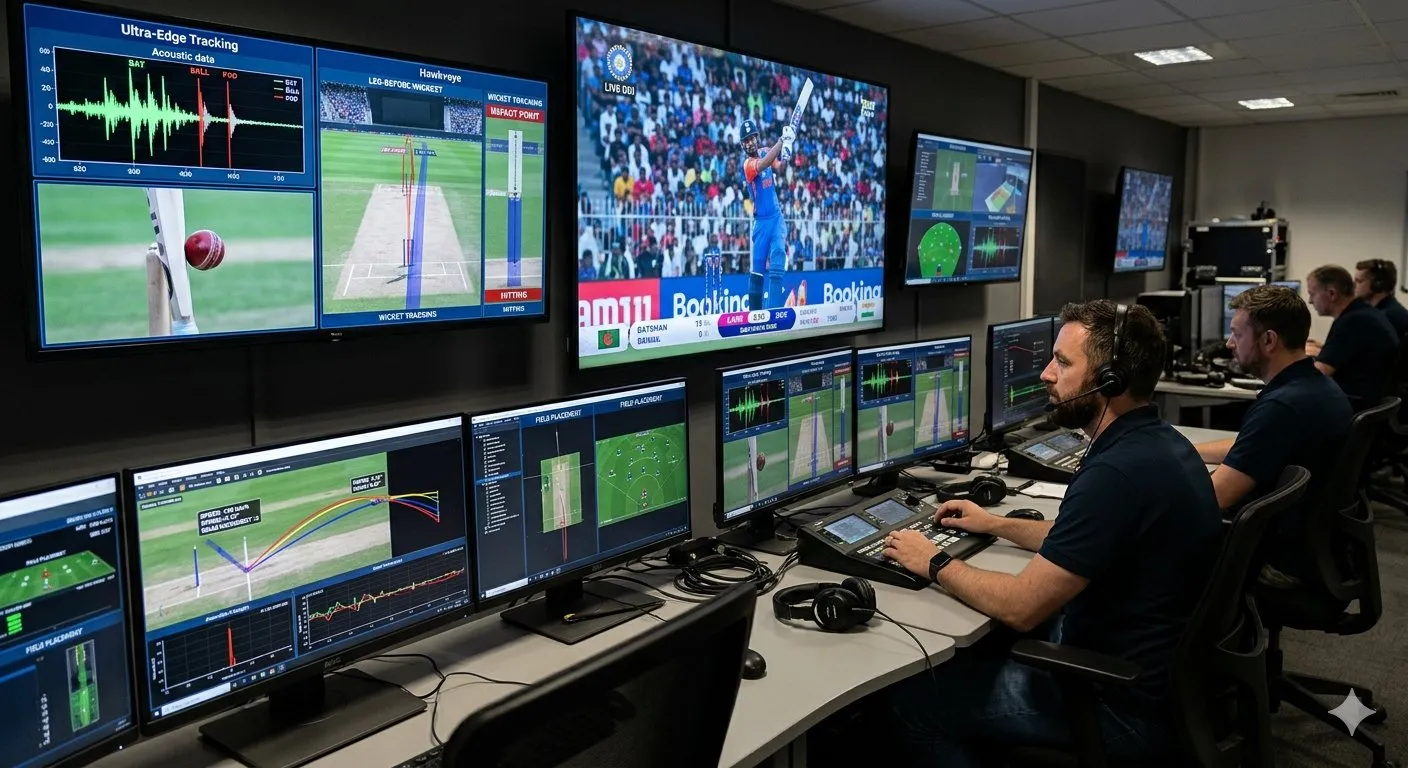
A close one-day international can turn on a decision that appears simple from the stands but looks different on replay. Readers following ind a vs sl a odi 2026 may encounter disputed appeals or tight umpiring calls in match coverage. Those moments offer a useful way to understand how review technology, on-field judgement, and playing conditions work together. The Decision Review System does not remove every error. It gives teams a defined process to challenge certain decisions, while the match continues to depend on the laws and protocols in force.
Why Cricket Uses Reviews
Umpires make decisions in real time, often with a player, ball, and fielding movement passing through their view in a fraction of a second. Reviews provide a formal way to reconsider eligible decisions when a team believes an error has occurred. The system is designed to support decision-making, not to replace the on-field officials.
A review can also affect the rhythm of an innings. Players may pause while footage and available technology are examined. That delay is part of the process, and the final decision follows the competition’s review protocol. Viewers should understand the procedure before judging whether a review was used correctly.
Know Which Decisions Qualify
The types of decisions that can be reviewed depend on the playing conditions. In many international formats, teams can challenge certain dismissals or not-out decisions, subject to the rules for that match. The exact process, available reviews, and consequences of an unsuccessful challenge should be checked in the relevant regulations.
Not every disagreement qualifies for a review. When a disputed decision circulates through Malik Mumbai Telegram, the official playing conditions are more useful than an isolated clip. Teams cannot challenge just any moment; knowing the eligible decisions helps viewers understand why some appeals cannot be referred.
Understand the Technology Involved
Different technologies may be used to examine different aspects of a decision. Ball-tracking systems can help assess the projected path of a delivery, while audio and video tools may assist with identifying contact. The available technology depends on the match and the arrangements approved for that competition.
Each tool has a defined purpose and limits. A replay angle may not show every detail, and a graphic should be interpreted within the protocol used by the officials. Viewers should avoid assuming that one image answers every question. The third umpire applies the relevant evidence and decision standard.
Follow the Review Process
A review generally begins when the captain or batter signals a challenge within the permitted time. The on-field umpire communicates with the review official, who checks the relevant evidence. The process may include consultation with the technology operator and a return decision to the field.
The review sequence matters because it follows defined steps, rather than an informal discussion between players and officials. Fans following Malik Mumbai Instagram may see short clips that omit the original signal or the full review procedure. Official playing conditions remain the best reference for the timing and available evidence.
Consider Its Effect on Strategy
Teams must decide when a review is worth using. A captain may weigh the match situation, the quality of the appeal, and the number of reviews remaining. Using one too early can leave fewer options later, while waiting too long may mean that the permitted time has passed.
Batters and bowlers also learn how reviews influence their decisions. A bowler may appeal with confidence, while a batter may consider whether contact occurred or whether the ball was likely to miss the stumps. These judgements are part of the contest, but they do not change the underlying review rules.
Read Match Reports With Care
A clear match report should explain what was reviewed, which evidence was used, and why the decision stood or changed. It should avoid implying that technology is infallible. When a report does not explain the relevant playing condition, readers should consult the official match regulations before drawing a conclusion.
The topic cricket review system is broader than one disputed call. It includes technology, communication, umpire responsibilities, and the rules that govern each competition. Reviewing these elements helps fans understand close moments without turning every disagreement into a claim of bias or misconduct.
Conclusion
A review can change the course of an ODI, but understanding the decision takes more than watching a replay. The relevant playing conditions, available technology, and umpire’s explanation all matter when assessing a disputed call. Fans who encounter cricket reports on malikmumbai.in can use them as a starting point for questions about the game, then consult official match regulations for the precise procedure. Knowing what the system can and cannot review makes close decisions easier to discuss without assuming that every disagreement reflects an error.